
Clarinet Fingering Chart and Reference Guide
Clarinet Fingering Chart
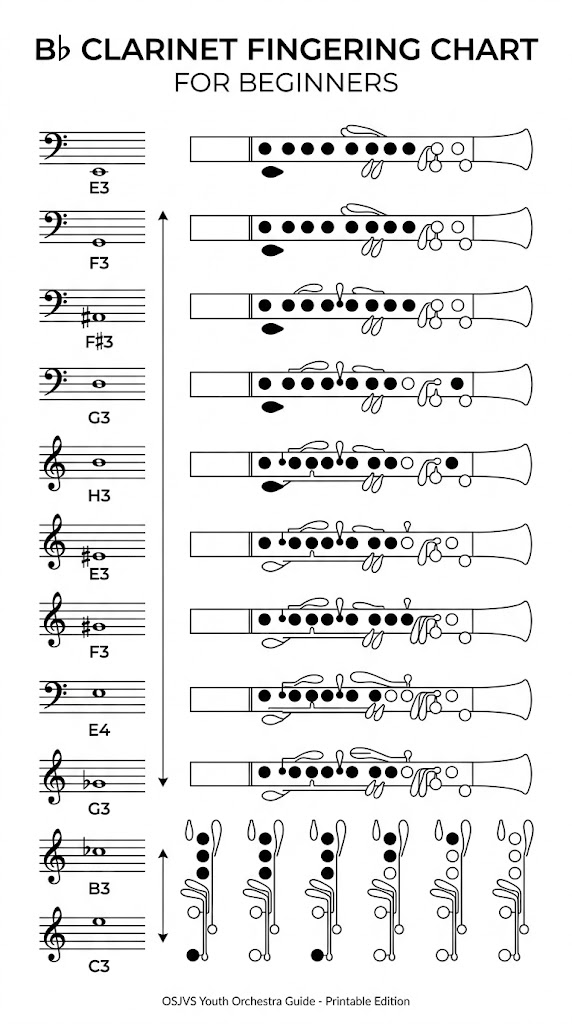
Pro Tip: Keep your fingers curved and close to the tone holes and keys even when not pressing them. Smaller movements increase speed and improve technical control.
Practicing with a reliable clarinet fingering chart every day strengthens coordination and helps you transition smoothly between notes.
How to Read Clarinet
Fingering Diagrams
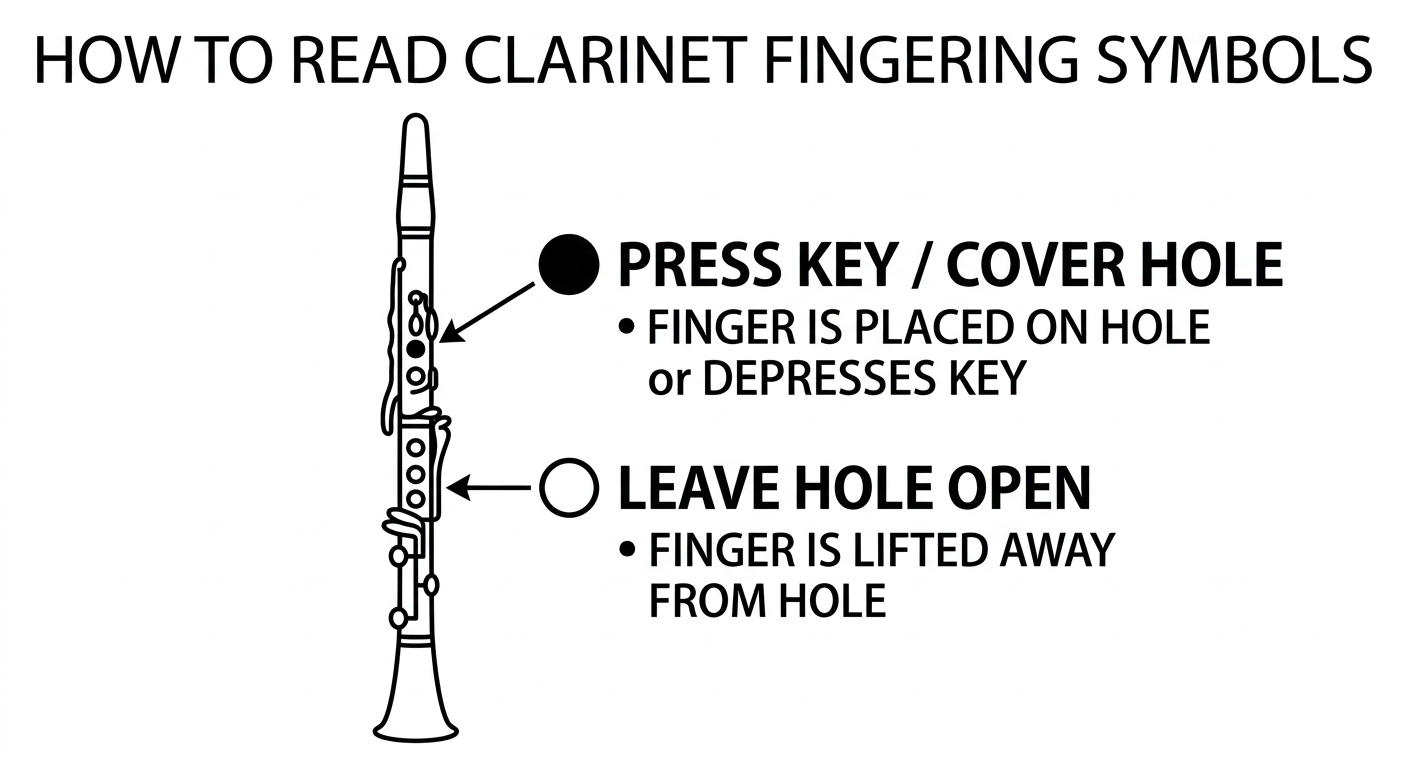
Filled circle means cover the tone hole or press the key.
Open circle means leave the tone hole uncovered.
Side keys are operated by the right hand.
The register key activates the upper register.
Understanding these symbols allows you to read a clarinet fingering guide quickly during practice and performance.
Understanding Your Clarinet
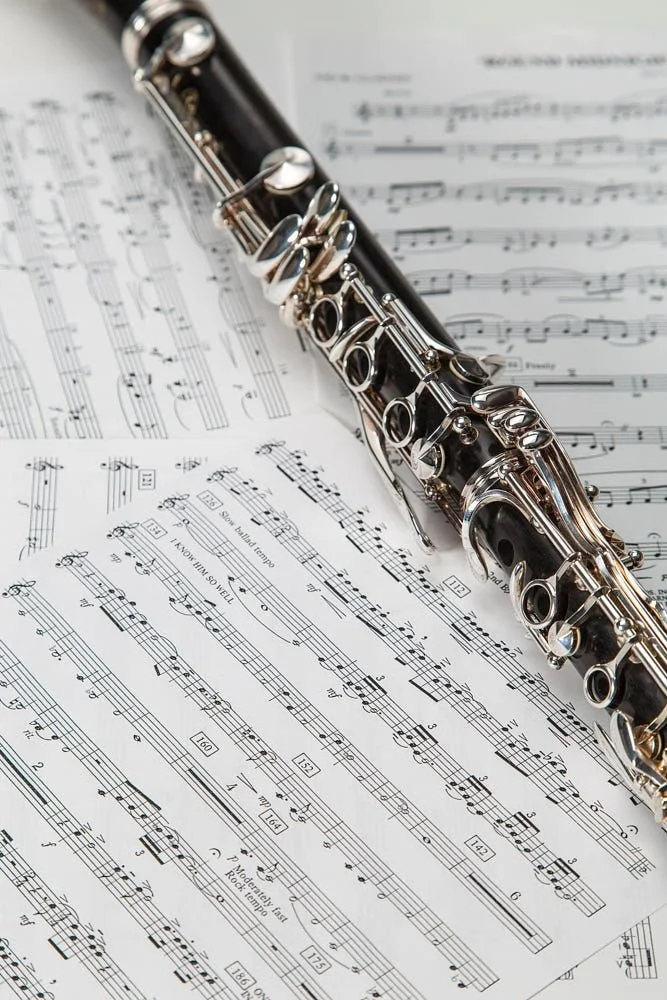
Knowing how your instrument works makes it easier to improve tone and fix common problems
Mouthpiece
Sound begins here. Proper embouchure and correct reed placement directly affect clarity, tuning, and response.
Barrel
Connects the mouthpiece to the upper joint and allows small tuning adjustments.
Upper Joint
Controlled mainly by the left hand. Manages most upper register fingerings.
Lower Joint
Operated by the right hand. Responsible for lower notes and key transitions.
Bell
Supports projection and strengthens the sound of lower notes.
Mastering Bb on the Clarinet
Bb is one of the most frequently used notes in band and orchestral music. Knowing multiple Bb clarinet fingerings improves tuning, flexibility, and technical flow.
Standard Bb
Comfortable and reliable for most musical situations. Ideal for beginners.
Side Bb
Useful for fast passages and smoother note transitions.
Alternate Bb
Helpful in chromatic scales and advanced repertoire where finger movement must stay efficient.
Practicing each Bb option gives you greater control and consistency.
Solve Common Clarinet Problems
Squeaking Notes
Often caused by biting too hard, weak embouchure, or uncovered tone holes. Maintain steady air support and ensure every tone hole is fully sealed.

Airy or Thin Tone
Usually results from inconsistent airflow or leaking fingers. Use faster supported air and check finger placement carefully.
Difficulty Crossing the Break
Transitions between A and B can feel unstable at first. Practice slow slurred exercises and focus on smooth register key control with the left thumb.
Improve Faster With the Right Tools
A clear clarinet fingering chart builds technical confidence and eliminates guesswork during practice.
Playing in an ensemble develops listening, blend, rhythm accuracy, and musical awareness that solo practice alone cannot teach.
L Orchestre symphonique des jeunes de Vaudreuil Soulanges welcomes dedicated clarinetists who want to grow in a supportive musical community.